gstack
A workflow from product idea to PR
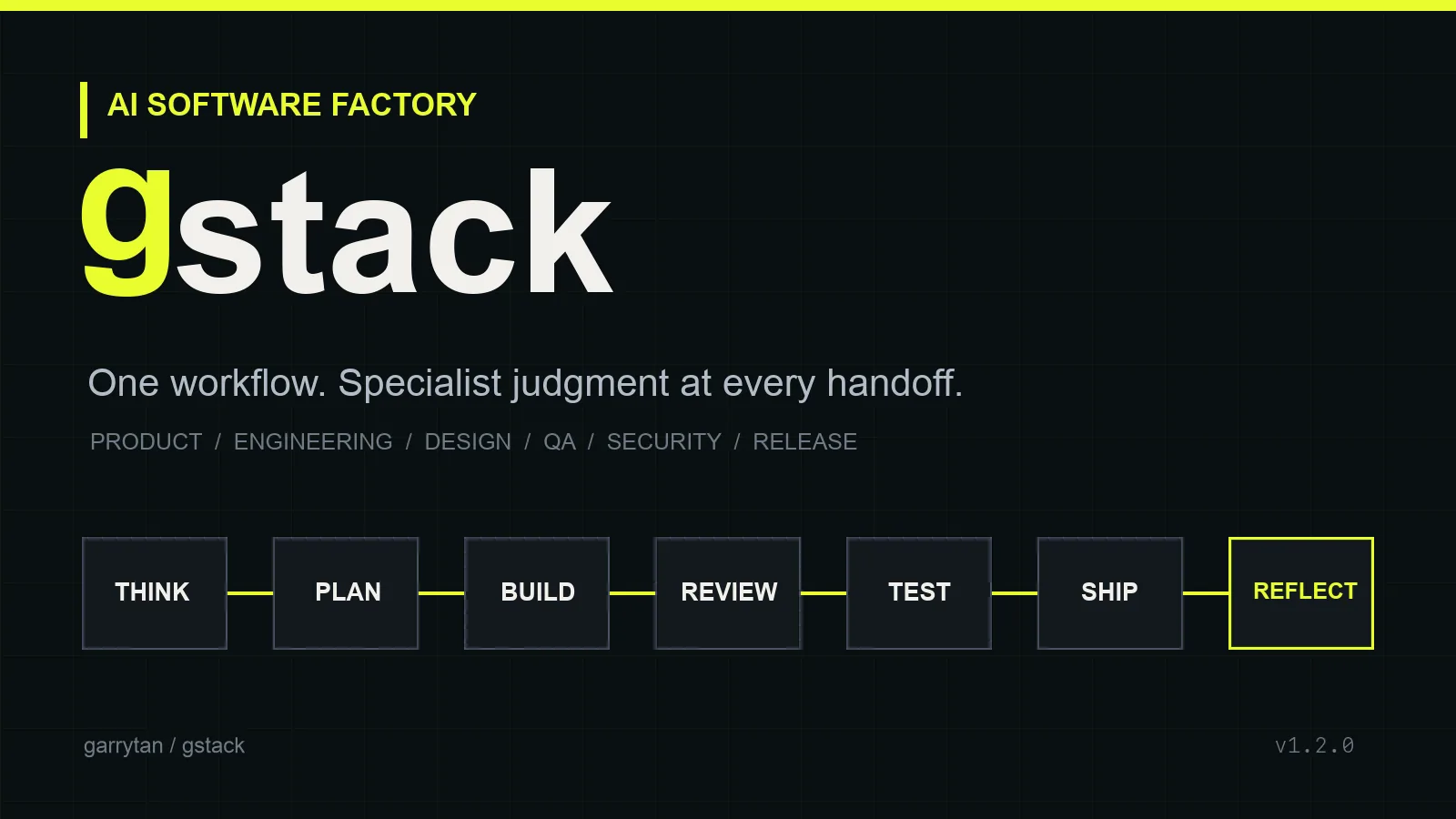
Garry Tan's specialist skills connect product exploration, plan review, code review, browser testing and PR delivery, carrying documents and verification evidence into the next stage.
Clients listed by the author
- Claude Code
- Codex (experimental)
- Cursor (experimental)
- OpenCode (experimental)
- GitHub stars
- 137,978
- Version
- 1.91.291.0
- Checked
- Categories
- EngineeringProduct & Project
Start at your stage. Produce what the next step needs.
Use office-hours to turn an idea into a clear problem and approach, or autoplan to review an existing plan. Once code is ready, move through review, QA and PR delivery. Choose the task that matches your current progress.
Pick a task and get started
These six tasks are entry points for different stages. Install once, then choose what you need. If gstack is already configured, start with the prompt.
Start here when deciding what to build. /office-hours investigates the problem, compares approaches and produces a design document.
Install and configure gstack
The command below is for a first Claude Code installation. Then merge the documented CLAUDE.md configuration while preserving project rules. Codex, Cursor and OpenCode require their corresponding --host setup. If gstack is already installed, follow the upgrade guide instead of cloning again.
Read the author’s setup guidegit clone --single-branch --depth 1 https://github.com/garrytan/gstack.git ~/.claude/skills/gstack && cd ~/.claude/skills/gstack && ./setupGive your AI this first task
These editorial examples follow each skill's source and use Claude Code command names. Adapt the scenario and supply your materials. In Codex or Cursor, request the matching gstack-<skill> name; OpenCode uses /gstack-<skill>.
/office-hours I want to build a weekly-report assistant for project managers, initially by collecting scattered project updates into one report. I will provide user feedback and the current process. Ask about concrete pain, existing alternatives and who needs this most, one question at a time, then challenge my key assumptions. Offer 2–3 meaningfully different approaches with effort, risks and reusable capabilities. Once I choose a direction, write the design document, the smallest testable version and a concrete real-world validation step. Do not implement the feature in this session.
Check what you receive
- User problems, current alternatives and untested assumptions are separated, with the proposed direction grounded in actual feedback.
- At least two comparable approaches include effort and risks. The recommendation explains trade-offs and preserves your choice.
- An accessible design document and a concrete next validation step, without feature implementation.
More about this skill
gstack connects stages through their outputs. An office-hours design document feeds later plan reviews; an engineering test plan can guide QA; code-review and QA findings feed delivery. You can enter at your current stage without running the entire workflow for every small change.
office-hours investigates the problem and challenges assumptions before comparing approaches and producing a design document. autoplan reviews product scope, applicable UI design and developer experience, then engineering reviews the final amended plan. Proposed changes to your stated direction remain yours to decide.
Code review and debugging serve different needs. review examines branch changes for concrete defects and applies fixes according to its rules. When you already have an unexplained failure, investigate focuses on reproduction, tracing causes and testing hypotheses before repair and verification.
There are two QA paths. qa-only records findings, replay steps and evidence while leaving product code and tests unchanged. qa proceeds from confirmed findings to repairs, regression checks and commits. Both can select checks for APIs, CLIs, background jobs and webhooks as well as webpages; prerequisites depend on the target.
ship turns a feature branch into a reviewable delivery by integrating the base, running tests and reviews, checking documentation, committing, pushing and creating or updating a PR. Merging and production verification belong to land-and-deploy; existing repository CI may still run when code is pushed.
Choose installation for your client. Bare ./setup installs for Claude Code; Codex, Cursor and OpenCode require the corresponding --host option. Run ./setup --status to inspect installations. gstack is MIT-licensed; model calls and external services use separate accounts and billing.
Sources and verification
Sources checked
Usage notes are based on author documentation. We have not tested every skill’s generated output.